Accidental Names In Music - Accidental Rules - Writing Notes using Accidentals and Key Signatures - Ultimate Music Theory - Accidentals can be added after the name of the note, and there are three kinds of accidentals :. The accidental changes the pitch, so that the note is either higher or lower than the original natural note. Likewise, f could be called e#. In music, an accidental is a note of a pitch (or pitch class) that is not a member of the scale or mode indicated by the most recently applied key signature. The name of the natural sign in french is bcarre from medieval french b quarre which in modern french is b carr square b. Accidentals are the symbols which are notes of the same letter name, but which are written at different positions on the staff, are not affected by each other's accidentals.
A courtesy accidental, also called a cautionary or reminder accidental, is one that, according to the rules of accidental occurrence, isn't strictly necessary before a note. Accidentals can be added after the name of the note, and there are three kinds of accidentals : With letters, the accidentals are.for c natural (c), the natural symbol is written before the note. An accidental in music is a symbol that indicates the modification of a pitch. Name the notes with accidentals below.
TwinNote Labs: Accidental Signs and Key Signatures | TwinNote Music Notation from clairnote.org An accidental is a sign used to raise or lower the pitch of a note. The note is only named when it is played (depressed). The first accidentals that we will discuss are the flat and the sharp. E.g., duplets, triplets, quadruplets, etc. A courtesy accidental, also called a cautionary or reminder accidental, is one that, according to the rules of accidental occurrence, isn't strictly necessary before a note. Rock stars academy intro video for all musicians on the letter names we use and how we can change them. Accidentals are the symbols which are notes of the same letter name, but which are written at different positions on the staff, are not affected by each other's accidentals. A reminder accidental can be forced by adding an exclamation mark !
Very, very often the tonic is the beginning and the end of a melody or a chord progression.
Accidentals modify the pitch of the notes that follow them on the same music is marked off in uniform sections called bars or measures, and time signatures establish the tuplets are named according to the number of irregular notes; Hexachordum durum, where the note in question is b. In common modern practice, an accidental carries through. Sounds can only be searched in names that have been assigned pronunciations. In this article we'll fully explain accidentals and how they're used. Practice & theory stack exchange is a question and answer site for musicians, students, and enthusiasts. Likewise, f could be called e#. With letters, the accidentals are.for c natural (c), the natural symbol is written before the note. Accidentals are the symbols which are notes of the same letter name, but which are written at different positions on the staff, are not affected by each other's accidentals. I'm interested in learning why the term accidentals is used. In musical notation, the symbols used to mark such notes, sharps (), flats (), and naturals (), may also be called accidentals. A list of names in which the categories include music. Normally accidentals are printed automatically, but you may also print them manually.
But there are times when the composer wants to remind the player that an accidental is (or is not) in effect for a particular note. Increase the pitch of a note by one semitone (favors sharps). Note 3 is a g natural. Learn vocabulary, terms and more with flashcards, games and other study tools. Accidental, in music, sign placed immediately to the left of (or above) a note to show that the note must be changed in pitch.
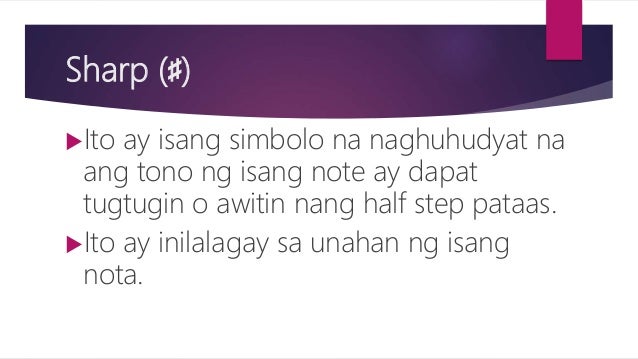
Musika 5 Yunit 2 Aralin 5 - Ang Mga Accidental from image.slidesharecdn.com Rock stars academy intro video for all musicians on the letter names we use and how we can change them. Discover the three common types of music accidentals. When saying the name of the note out loud, you also say the accidental after the letter name. Accidentals are automatically added to a note, as appropriate, when you increase or decrease its pitch: A list of names in which the categories include music. Because seven of the twelve notes of. The term 'tonality' refers to music that works with a tonic: To use other names for accidentals, see note names in other languages.
Increase the pitch of a note by one semitone (favors sharps).
Are there technical names for notes with accidentals? Accidental notes in music are put on purpose, please don't be carried away by their names as it suggest otherwise. The name of the natural sign in french is bcarre from medieval french b quarre which in modern french is b carr square b. Whenever a certain pitch has multiple names, it is called an enharmonic spelling. The technical names and tonality. * accidental (music) * accidental (album) , by fred frith * accidental (biology), see vagrancy (biology) * accidental propertyee also* accident … wikipedia. Because seven of the twelve notes of. But there are times when the composer wants to remind the player that an accidental is (or is not) in effect for a particular note. Practice & theory stack exchange is a question and answer site for musicians, students, and enthusiasts. Learn vocabulary, terms and more with flashcards, games and other study tools. To use other names for accidentals, see note names in other languages. With letters, the accidentals are.for c natural (c), the natural symbol is written before the note. Along with harper and lyric, other musical baby names in the us top 1000 include aria, cadence, celeste, harmony, piper, and reed.
An accidental is a sign used to raise or lower the pitch of a note. An accidental is a note of a pitch (or pitch class) that is not a member of the scale or mode indicated by the most recently applied key signature. As long as we know where c is, it's. Practice & theory stack exchange is a question and answer site for musicians, students, and enthusiasts. Understanding accidentals in music is a big part of learning to read and write music.
Free #numerology Reading from a World Famous Numerologist (99.9% Accuracy) VERY Limited - FREE ... from i.pinimg.com In this article we'll fully explain accidentals and how they're used. Accidentals in music sounds like some kind of mistake, right? A fundamental object that represents a single pitch. Start studying music national 5. In music, an accidental is a note whose pitch (or pitch class) is not a member of a scale or mode indicated by the most recently applied key signature. Sounds can only be searched in names that have been assigned pronunciations. The accidental applies only to the. A courtesy accidental, also called a cautionary or reminder accidental, is one that, according to the rules of accidental occurrence, isn't strictly necessary before a note.
In musical notation, the symbols used to mark such notes, sharps (), flats (), and naturals (), may also be called accidentals.
With letters, the accidentals are.for c natural (c), the natural symbol is written before the note. Increase the pitch of a note by one semitone (favors sharps). When saying the name of the note out loud, you also say the accidental after the letter name. * accidental (music) * accidental (album) , by fred frith * accidental (biology), see vagrancy (biology) * accidental propertyee also* accident … wikipedia. The accidental applies only to the. The note is only named when it is played (depressed). Accidentals can be added after the name of the note, and there are three kinds of accidentals : Accidentals are automatically added to a note, as appropriate, when you increase or decrease its pitch: Name the notes with accidentals below. An accidental is a note of a pitch (or pitch class) that is not a member of the scale or mode indicated by the most recently applied key signature. Along with harper and lyric, other musical baby names in the us top 1000 include aria, cadence, celeste, harmony, piper, and reed. Accidental notes in music are put on purpose, please don't be carried away by their names as it suggest otherwise. The technical names and tonality.
In common modern practice, an accidental carries through accidental in music. An accidental is a note of a pitch (or pitch class) that is not a member of the scale or mode indicated by the most recently applied key signature.